.png)

What Are the Top Challenges in Rural Healthcare?

At least 46 million people live in rural areas of the United States–equivalent to the population of our 20 largest cities, or 15% of our overall population. Yet, rural communities experience higher rates of the following diseases and conditions, as CDC has noted:
- Higher rates of hypertension and obesity.
- Higher rates of cardiovascular disease, stroke, cancer, diabetes, and respiratory illness.
- Higher rates of asthma, especially among youth.
- Higher rates of HIV / HCV among tribal communities.
- Higher rates of suicide and drug overdose deaths.
Residents in rural areas also experience a 20% higher age-adjusted death rate.
The disparity in health between rural and urban communities is clear. Less clear is how to resolve it due to the challenges in rural healthcare. Rural communities face many obstacles to improving health outcomes. Let’s review some of the most pressing.
Care Deserts
80% of Counties Have a Care Desert
Care deserts pervade the United States, as recent research by GoodRX has revealed. These deserts lack adequate access to and infrastructure for healthcare services. Types of deserts include pharmacy, hospital and trauma, and primary care / community health.
Healthcare Staff Shortages
30 Physicians: 100,000 People
The National Rural Health Association notes that in rural areas, the ratio of primary physicians to people is 30:100,000. In urban areas, it’s 30: 263. Lack of resources and burnout hinder attracting and retaining clinicians.
Transportation Burdens
1:5 Adults with Limited Transit Access Forego Healthcare
The Robert Wood Johnson Foundation and Urban Institute discovered that transportation problems lead 1:5 adults to go without healthcare. Public transportation is often lacking in rural areas. And even when residents have access to vehicles, they cite burdens such as extended drive times and high fuel costs.
Senior Health
24% of Seniors Live in Rural Areas
America’s Health Rankings finds nearly a quarter of adults age 65 and over live in rural communities. They are less likely to engage in healthy behaviors and more likely to face challenges accessing specialized care as their health needs increase.
Obesity
Nearly Half of Rural Residents Are Obese
The USDA reports that nearly 50% of people living in rural areas are obese. Adults with obesity are more likely to develop hypertension, heart disease, Type 2 diabetes, some cancers, and other long-term health conditions.
Tribal Health
19% of AI / AN Adults in Rural Areas Have Diabetes
National Rural Health Association finds nearly 1:5 American Indian and Alaskan Native adults have diabetes. Tribal communities also experience higher rates of HIV and HCV. And those in rural communities experience worse health outcomes than those in urban areas.
Mental Health
65% of Rural Counties Lack a Psychiatrist
Mental Health America reports that most rural counties do not have a psychiatrist and lack other mental health professionals, as well. Rural residents can face unique stressors that affect their mental well being but lack community options or support for seeking help.
Opioid Abuse
1.2 Million Rural Residents Misused Opioid Prescriptions in 2024
The National Survey on Drug Use and Health has noted that more than a million people in rural areas misused opioid prescriptions in 2024 alone. Many rural areas are also dealing with illicit and synthetic opioid abuse. Besides overdose, risks include the spread of hepatitis C and HIV.
Overcoming Rural Health Challenges to Improve Outcomes
While these challenges in rural areas are daunting, there is good news. Medication adherence support can address them to achieve breakthrough health outcomes.
Scene Health has implemented successful programs in the most rural areas around the world, from Uganda to Mississippi, to achieve medication adherence rates of 80-90%. We have seen first hand the difference such adherence makes to rural communities, from better health outcomes to avoiding acute care costs.
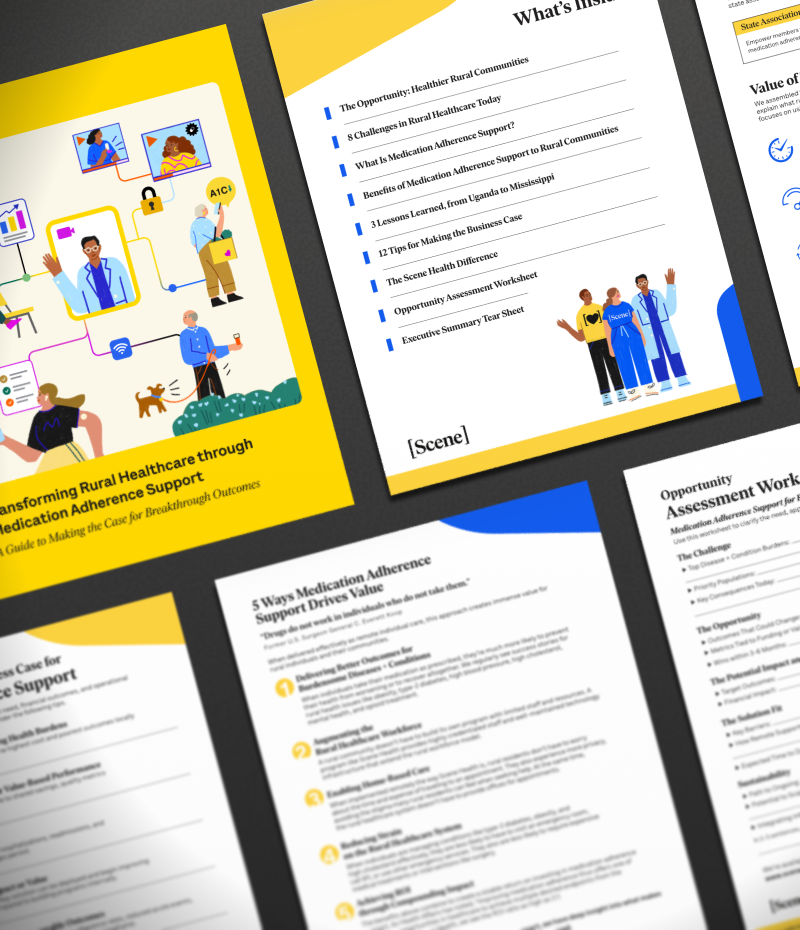
We want every rural community to experience those kinds of breakthrough outcomes. That’s why we assembled a comprehensive new guide, Rural Healthcare Transformation through Medication Adherence Support. If you want to close gaps in care for rural communities, this is your starting point for a scalable medication adherence solution.

Download The Transforming Rural Healthcare Through Medication Adherence Support Guide
Download The Transforming Rural Healthcare Through Medication Adherence Support Guide