.png)

How Can Medication Adherence Improve Rural Health Outcomes?
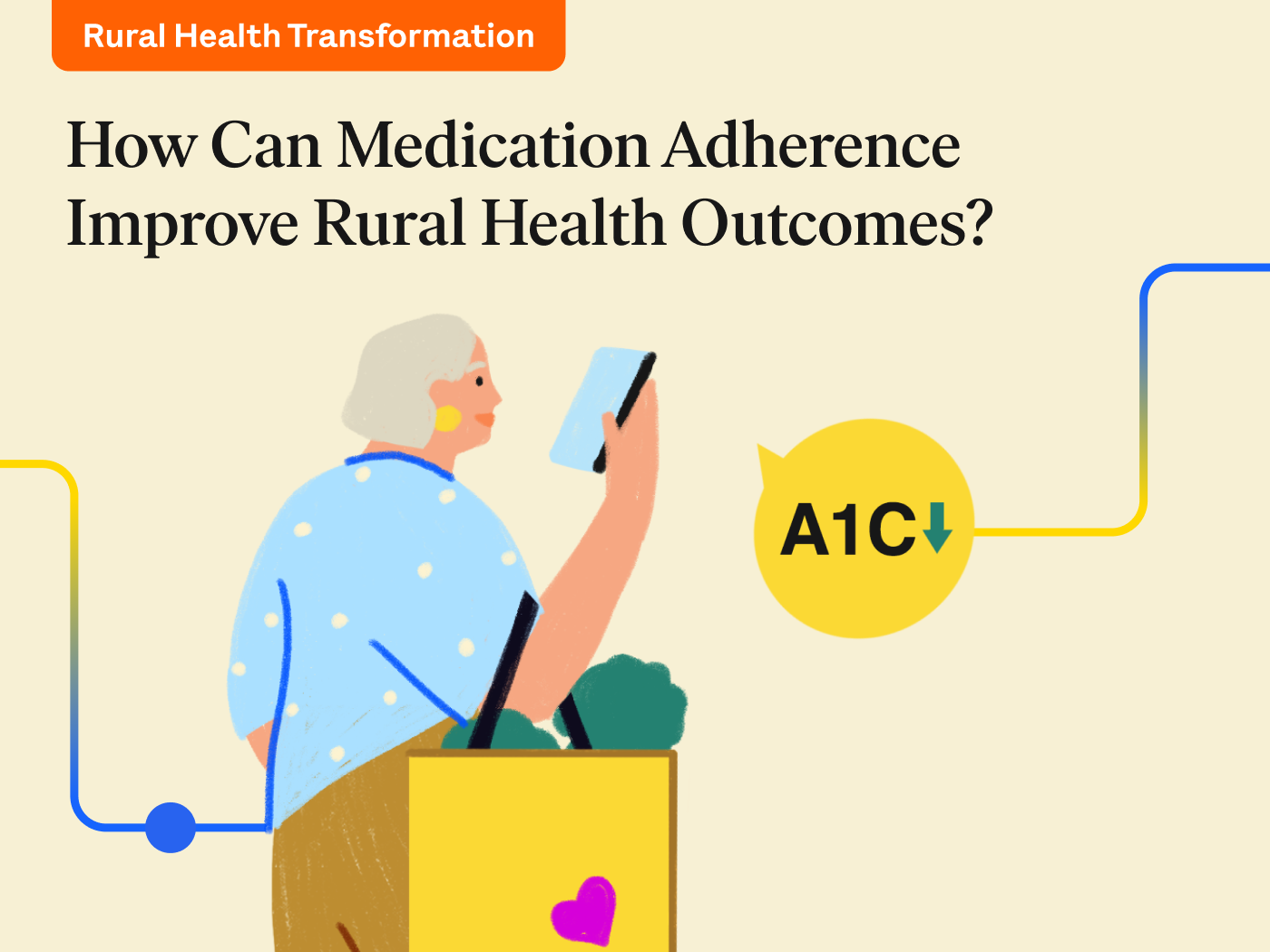
Rural communities face disproportionately high rates of diseases and conditions like obesity, asthma, and diabetes, and they require medication to treat or manage. (For an overview, see our article What Are the Top Challenges in Rural Healthcare?) Up to 50% of people do not take their medication as prescribed, so medication adherence is a significant opportunity to improve rural health outcomes.
This article explains what medication adherence is, why medication nonadherence happens, and how improving medication adherence can improve rural health outcomes.
What Is Medication Adherence?
At Scene Health, we find this is a useful definition of medication adherence:
Medication adherence is the degree to which an individual takes the correct medication at the frequency, dosage, and timing prescribed.
If an individual doesn’t adhere, they risk suffering unwanted health outcomes ranging from disease progression to complications to death.
Consider a few examples where medication adherence is crucial to top health burdens in rural areas:
- GLP1s to treat obesity and, to some extent, type 2 diabetes.
- ACE inhibitors, beta blockers, and other medications to treat high blood pressure.
- Statins, inhibitors, and other medications to treat high cholesterol.
- Metformin and other medications to treat type 2 diabetes.
- Methadone and other medications to treat opioid abuse.
- Combination inhalers, inhaled corticosteroids, and other medications to treat asthma.
- Antirestrovirals such as NRTIs and INSTIs to manage HIV.
- Direct-acting antivirals such as NS5A inhibitors to address HCV.
- Antidepressants to treat depression and other mental health conditions.
What Are Some Reasons People Do Not Take Medication As Prescribed?
Problems with medication adherence happen for a wide range of reasons. Some common examples include:
- Side Effects: Individuals experience side effects or have concerns about them.
- Misunderstanding: Individuals don’t fully grasp how taking the medication will make a difference to their health now and in the future.
- Complexity: Patients with complex conditions deal with multiple medications and providers.
- Lack of Symptoms: When individuals aren’t experiencing symptoms or the symptoms subside, they struggle to see the need for the medication.
- Dosage: Individuals are prescribed the wrong dosage, causing side effects or ineffective treatment.
If up to 50% of individuals in a rural community needing medication do not take it as prescribed, it’s not hard to imagine the cumulative financial toll and the strain on already limited resources.
What Are Some Consequences of Medication Nonadherence in Rural Areas?
Widespread medication nonadherence has systemic consequences, affecting everyone involved in rural healthcare. Two examples include:
Increased Reliance on Acute Care Interventions
Nonadherent individuals are more likely to experience complications and to require more expensive medical treatments or interventions like surgery.
Increased Burden on Emergency Services
Nonadherent individuals are more likely to experience an acute event that requires visiting an emergency room, calling 911, or using other emergency services–and this infrastructure is limited in rural areas.
These kinds of consequences add up to significant costs. The Annals of Pharmacotherapy notes that problems with medication adherence and optimization in the U.S. cause a $528.4 billion burden annually.
Improving Rural Health Outcomes by Improving Medication Adherence
While the consequences of medication nonadherence are daunting, they also mean that improving adherence can make a big impact. We like the way Health Affairs puts it:
“Improving medication adherence thus offers one of those rare opportunities in healthcare to achieve multiple desired endpoints from the same policy.”
At Scene Health, we see medication adherence rates of 80-90% and the ROI ratio as high as 2:1. We accomplish such outcomes through our clinically validated approach to medication adherence support, which works for the realities of rural healthcare.
We want every rural community to experience those kinds of breakthrough outcomes. That’s why we assembled a comprehensive new guide, Rural Healthcare Transformation through Medication Adherence Support. If you want to close gaps in care for rural communities, this is your starting point for a scalable medication adherence solution.